Xander Schwarz · 23 October 2026
Tracing Lexical Shifts in Community-Driven Knowledge Platforms and Their Effects on Retrieval Prioritization
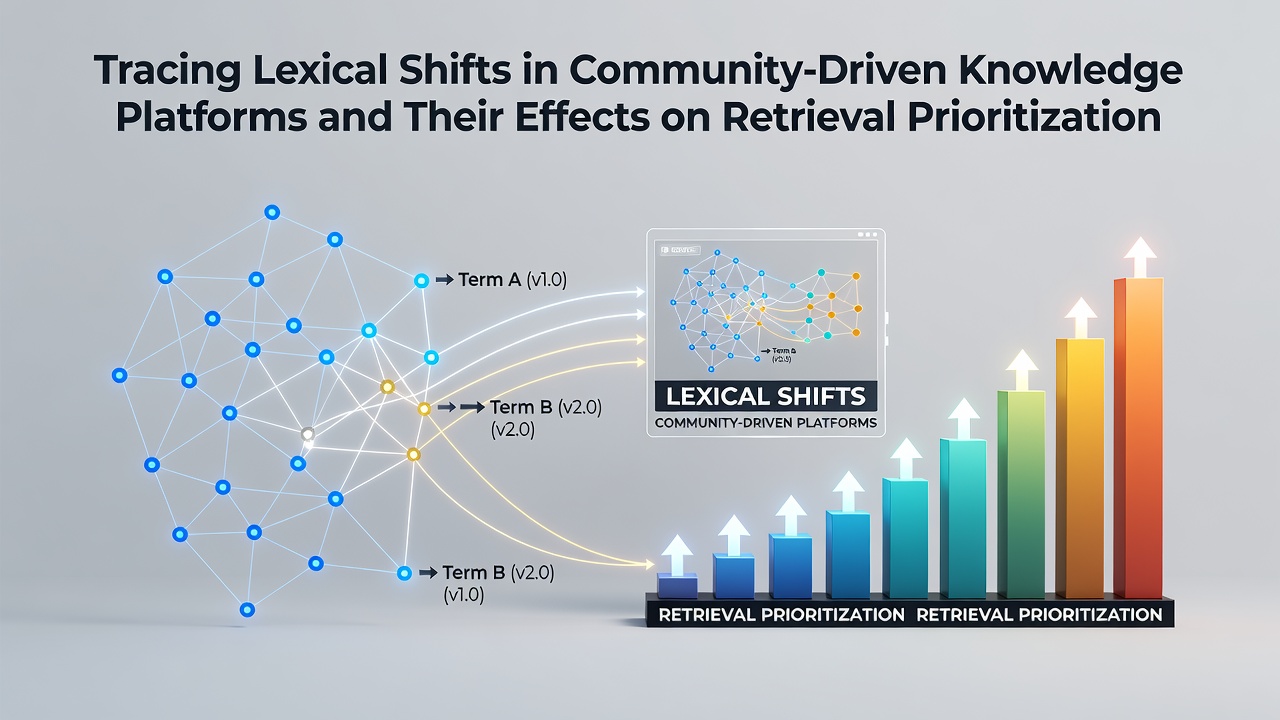
Community-driven knowledge platforms such as wikis and collaborative forums experience continuous lexical shifts as contributors introduce new terminology, refine definitions, and adjust phrasing to reflect emerging contexts while older expressions fade from active use. These changes alter how content matches user queries and influence the way retrieval systems rank and surface material during searches. Data from large-scale edit histories indicate that term frequency patterns evolve noticeably over months and years, prompting search algorithms to recalibrate prioritization rules based on updated relevance signals.
Mechanisms Behind Lexical Evolution in Shared Archives
Contributors on platforms like Wikipedia and similar repositories modify articles through incremental edits that introduce synonyms, expand acronyms, or replace outdated jargon with contemporary equivalents, and these adjustments accumulate into measurable vocabulary drifts across entire topic clusters. Researchers tracking edit logs have documented how specific domains see rapid term replacement when external events drive new discussions, whereas more static subjects exhibit slower transitions that still affect long-term indexing. Retrieval systems respond by updating inverted indexes to reflect current term distributions, which in turn changes which documents receive higher scores for particular query formulations.
Studies of temporal edit patterns reveal that lexical replacement often clusters around high-traffic pages first, then spreads to related entries as editors maintain consistency across linked content. This propagation creates ripple effects in retrieval prioritization because search engines weigh co-occurrence statistics and link structures that themselves shift when terminology updates. Observers note that platforms maintaining strict edit review processes tend to exhibit more gradual lexical change compared with open forums where rapid terminology adoption occurs without centralized oversight.
Impact on Search Engine Ranking Signals
Retrieval prioritization depends on matching query terms against indexed content, so lexical shifts directly modify the strength of those matches and alter position in result sets. When a community adopts a new preferred term for a concept, older pages using legacy vocabulary may drop in relevance scoring unless algorithms explicitly account for synonym relationships or historical usage data. Evidence from query log analyses shows that informational searches increasingly surface recently edited articles when those edits incorporate terms that align more closely with current user phrasing.
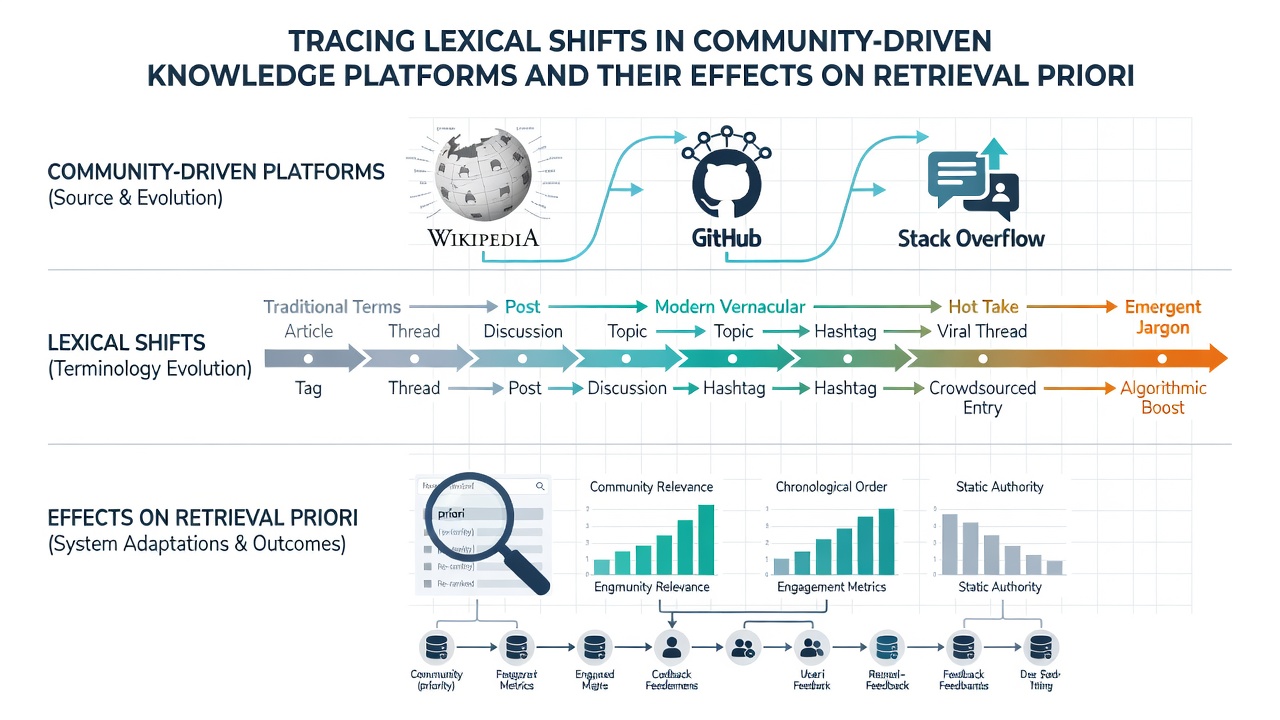
Algorithms that incorporate freshness signals alongside term frequency therefore amplify the effects of lexical evolution, giving newer or recently revised content an advantage in rankings. Those who study information retrieval systems have observed that platforms with dense internal linking experience faster propagation of new terms through the index because link text and anchor phrases also update during the same edit cycles. In October 2026 several major search providers adjusted their handling of community archive snapshots to better capture these ongoing vocabulary transitions without requiring full re-crawls of every article.
Case Examples from Major Platforms
One documented instance involves scientific terminology on collaborative encyclopedias where contributors standardized nomenclature following publication of new research guidelines, leading to measurable increases in retrieval for queries using the updated terms within weeks of the edits. Another pattern appears in technical documentation communities where abbreviation expansion and contraction cycles affect how code-related queries retrieve explanatory pages, with prioritization favoring entries that match the dominant abbreviation style at any given time. Data indicates that regional language variations within the same platform further complicate retrieval because editors in different locales may favor distinct lexical choices for identical concepts.
According to findings published by researchers at the University of Melbourne, lexical drift correlates with changes in click-through rates on search results drawn from community sources, suggesting that retrieval systems benefit from periodic re-evaluation of term weights. Similar patterns have been examined by analysts at Statistics Canada in their work on evolving digital information ecosystems, where shifts in terminology across shared knowledge bases influenced how government archives appeared in public search results.
Conclusion
Lexical shifts in community-driven knowledge platforms continue to reshape retrieval prioritization through changes in term distribution, synonym usage, adn index freshness signals. Tracking these movements requires ongoing analysis of edit histories and query alignment data, which allows systems to maintain accurate ranking even as language within the archives evolves. Continued monitoring of such dynamics supports more stable access to information across collaborative sources.