Parker Carter · 9 October 2026
Lexical Mapping Patterns in Regional Query Handling Across Evolving Digital Archives
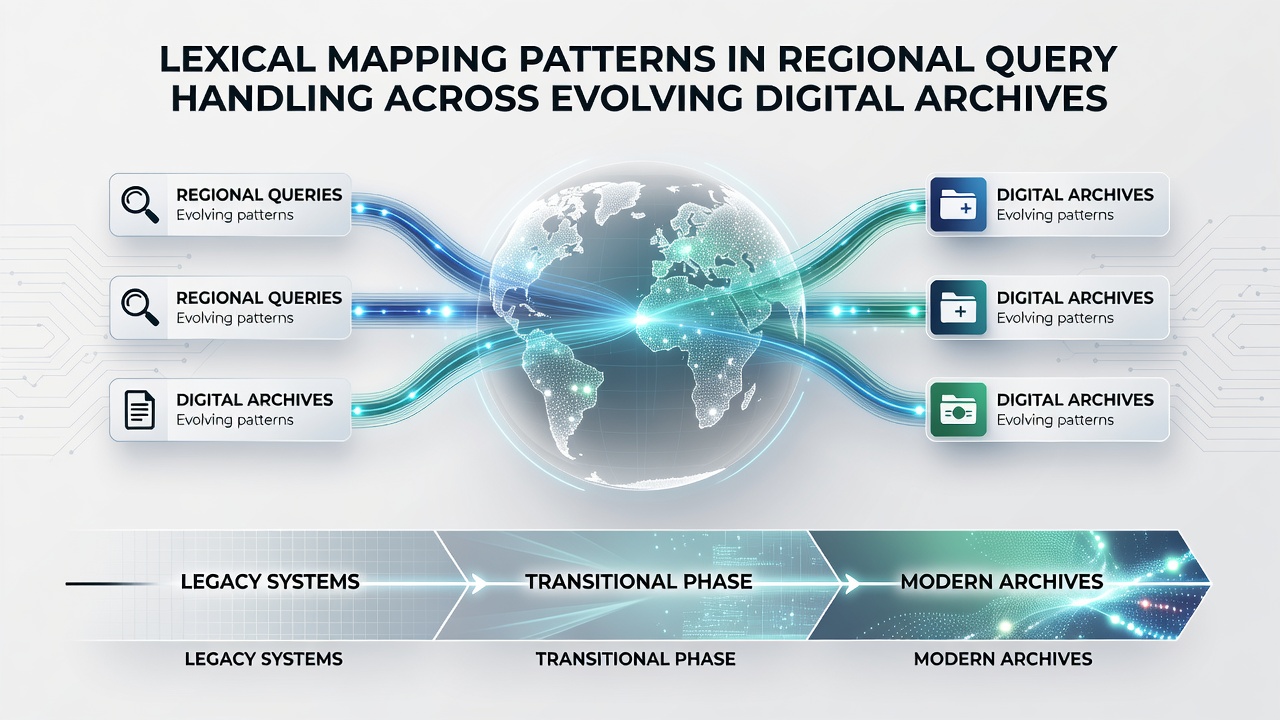
Digital archives maintain vast collections of indexed content that search systems process through lexical mapping techniques, and these methods adapt to regional query variations as archives evolve over time. Researchers track how word associations shift when users in different geographic areas submit queries that reference the same underlying topics yet employ distinct vocabulary sets, and data collected through October 2026 shows continued refinement in these mappings across major archival platforms.
Core Mechanisms of Lexical Mapping
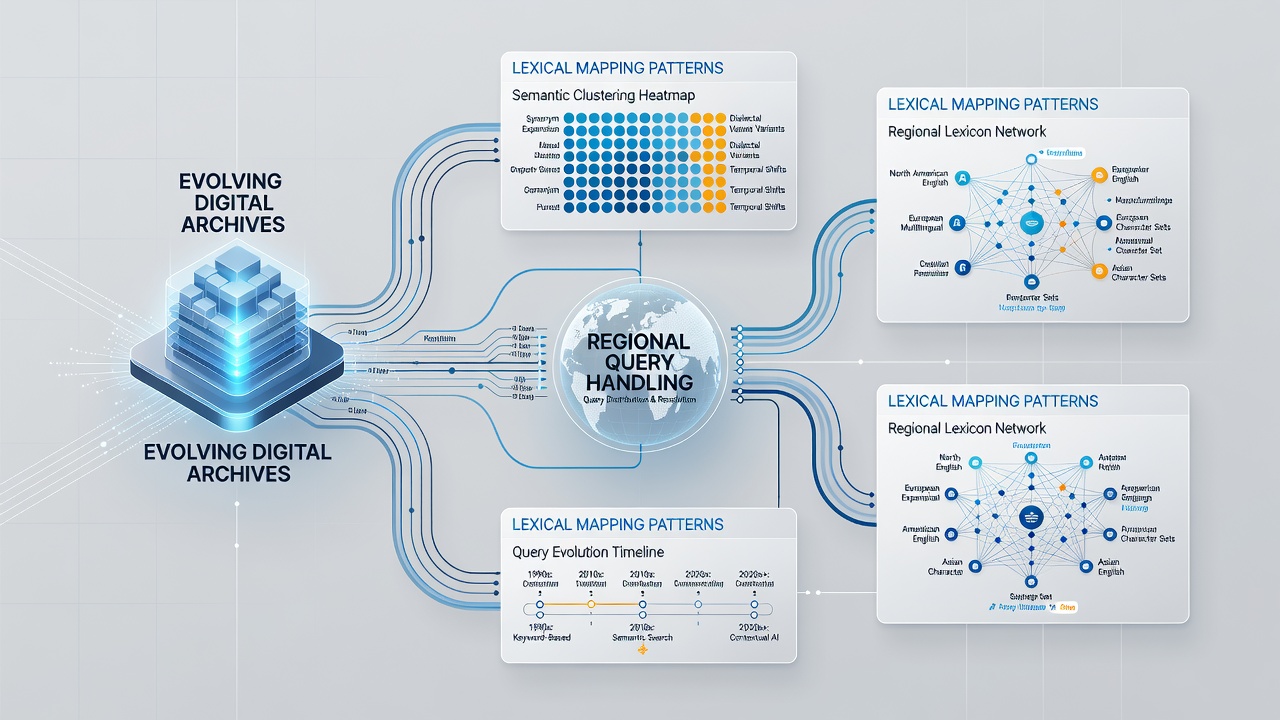
Lexical mapping connects surface-level terms in user queries to deeper semantic representations stored in archive indexes, and systems apply region-specific rules because language usage differs across locations. Experts note that English-language queries from North American users often favor direct noun phrases, whereas European queries incorporate more contextual modifiers, and mapping algorithms adjust tokenization patterns accordingly. Studies from academic institutions reveal that these adjustments occur through iterative training on regional log data, which allows archives to maintain relevance as new documents enter the collection and older entries receive updates.
Archival platforms update their indexes continuously, and lexical mappings respond by reweighting term relationships to reflect fresh content. Observers note that a query for historical records in one region may trigger different synonym expansions than the same conceptual query in another region, and this differentiation stems from localized training corpora rather than universal rules. Data indicates that such patterns stabilize only after multiple crawl cycles, particularly when archives incorporate multilingual materials that cross regional boundaries.
Regional Query Variations in Practice
Query handling diverges by region because users draw on local idioms, spelling conventions, and topical priorities that archives must accommodate through tailored lexical layers. In Asia-Pacific collections, for instance, researchers have documented heavier reliance on compound terms that reflect cultural naming practices, while North American queries lean toward abbreviated forms that mapping systems expand through probabilistic models. European archives demonstrate intermediate patterns that blend formal structures with emerging slang tracked in real time.
One study from a Canadian research consortium tracked query logs across three years and found that regional lexical clusters shifted measurably after major archive content refreshes, and similar observations appear in reports from the National Library of Australia. These shifts affect snippet generation and result ordering because mapped terms influence ranking signals that search interfaces apply uniformly across regions. Systems therefore maintain separate lexical tables that merge only at the final retrieval stage, preserving accuracy without sacrificing cross-regional consistency.
Evolution of Archives and Mapping Adjustments
Digital archives grow through periodic content additions and migrations, and lexical mapping systems must recalibrate to avoid drift in query interpretation. When an archive incorporates new regional collections, mapping algorithms detect novel term co-occurrences and integrate them into existing frameworks, and this integration happens faster in well-resourced regions than in emerging digital preservation projects. Figures from European digital heritage initiatives show that mapping accuracy improves after the first three update cycles following a major ingestion event.
Those who monitor archive performance note that crawl budget allocation influences how quickly lexical changes propagate, since deeper indexing of regional subdomains allows finer-grained mapping updates. In October 2026, several platforms reported accelerated adjustments after implementing differential crawl priorities that favored high-query-volume regions, and this approach reduced latency between content changes and improved query handling. Mapping layers also account for spelling variations and transliteration differences that arise when archives preserve materials from multiple scripts.
Observed Patterns Across Platforms
Patterns emerge when analysts compare lexical behavior across evolving archives, and one recurring observation involves the speed of synonym adoption in response to regional events. Archives that index news and cultural records show quicker mapping updates in regions with frequent public discourse changes, whereas static historical collections exhibit slower evolution in their lexical graphs. Research indicates that temporal decay functions applied to older mappings help maintain relevance, and these functions receive region-specific tuning parameters derived from usage statistics.
Another pattern appears in cross-lingual query scenarios, where users submit terms in one language while targeting archives dominated by another language. Mapping systems resolve these cases through pivot representations that link regional lexical clusters, and evidence from collaborative projects between institutions in different countries demonstrates improved retrieval when such pivots incorporate recent archive updates. The process relies on continuous monitoring rather than one-time configuration.
Conclusion
Lexical mapping patterns in regional query handling continue to adapt as digital archives expand and refresh their holdings, and the mechanisms rely on region-tuned algorithms that process evolving content efficiently. Data gathered through October 2026 confirms that these adaptations support consistent performance across diverse user bases while respecting local linguistic characteristics. Ongoing refinements in mapping techniques reflect the dynamic nature of both archives and the queries they serve.